
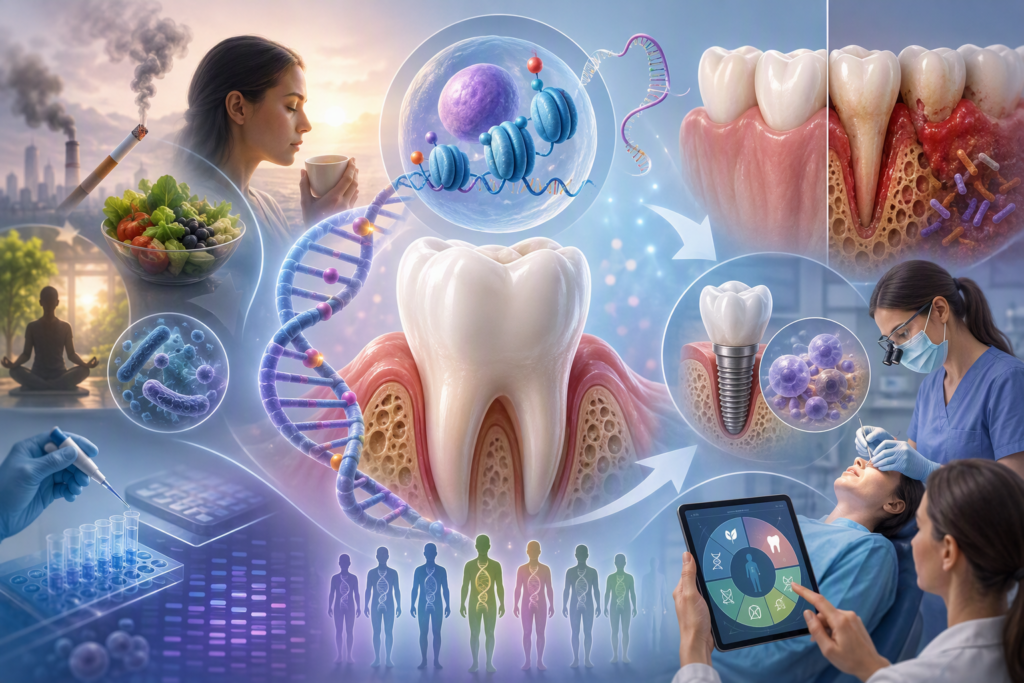
Introduction to epigenetics in dentistry
Epigenetics is a rapidly expanding scientific discipline that is revolutionising our understanding of disease and how the human body works. In dentistry, it offers fresh insight into how teeth and oral tissues develop, respond to injury and react to treatment. Long focused solely on the microbiota, anatomy, physiology and disease, oral medicine now incorporates subtler mechanisms involving genetics and gene expression.
Defining epigenetics
Epigenetics encompasses the biological mechanisms that modify gene expression without altering the DNA sequence. These changes can be passed on during cell division and influence how cells function.
In other words, individuals have a relatively stable genetic make-up, but epigenetics determines which genes are switched on or off in response to internal or environmental factors.
The main epigenetic mechanisms are:
- the methylation of DNA,
- the modification of histones,
- the non-coding RNAs (such as microRNAs).
Epigenetics applied to dentistry
In dentistry, epigenetics examines how these mechanisms influence:
- the development of teeth,
- the inflammatory response of oral tissues,
- the onset of dental diseases,
- the healing and regeneration of tissues.
Although this field is still relatively new in dental practice, research shows that it plays a major role in understanding oral diseases and developing innovative treatments.
Its role in tooth development
Tooth formation, or odontogenesis, is a complex process regulated by both genetic interactions and epigenetic mechanisms. The latter fine-tune the expression of genes involved in cell differentiation and tooth morphogenesis.
For example:
- epigenetic changes control the transformation of dental stem cells into specialised cells,
- they influence dentine and enamel formation,
- they contribute to preventing or giving rise to certain congenital dental abnormalities.
Involvement in oral diseases
Epigenetics plays a central role in many oral conditions, particularly periodontal diseases affecting the gums and the tissues supporting the teeth.
Periodontal diseases
These diseases result from a complex interaction between bacteria and the host’s immune response. Epigenetic mechanisms modulate this response by influencing the expression of genes involved in inflammation.
Studies show that:
- changes in DNA methylation are associated with the severity of periodontitis,
- some inflammatory genes, such as IL-6 or TNF, are epigenetically regulated,
- environmental factors such as smoking or diet can alter the epigenome and influence disease risk.
Other dental conditions
Epigenetics is also involved in:
- the development of tooth decay,
- the pulpal diseases,
- the peri-implant lesions,
- some oral tumours.
In particular, it influences how tissues respond to bacteria and their ability to defend or repair themselves.
The influence of environment and lifestyle
One of the major features of epigenetics is its close link to the environment. In dentistry, several factors can modify gene expression:
- the effects of smoking,
- thediet,
- the effects of stress,
- the bacterial infections,
- some systemic diseases.
These factors help explain why two patients in similar circumstances may develop dental diseases that progress very differently.
Towards personalised dentistry
The main value of epigenetics in dentistry lies in its clinical potential. Identifying each patient’s specific epigenetic changes makes it possible to:
- better predict disease risk,
- adapt treatments to the individual,
- develop new therapies targeting epigenetic mechanisms,
- improve the regeneration of dental tissues.
For example, some research explores drugs capable of modulating DNA methylation or histones to reduce inflammation or promote healing.
Epigenetics in dentistry represents a major advance in understanding the biological mechanisms that govern oral health. Going beyond genetics alone, it highlights the decisive influence of the environment and cellular interactions on gene expression.
Still developing, this field promises to transform dental practice towards a more preventive, personalised and effective approach, paving the way for new diagnostic and therapeutic strategies.
Sources:
Epigenetics: general characteristics and implications for oral health (PMC)