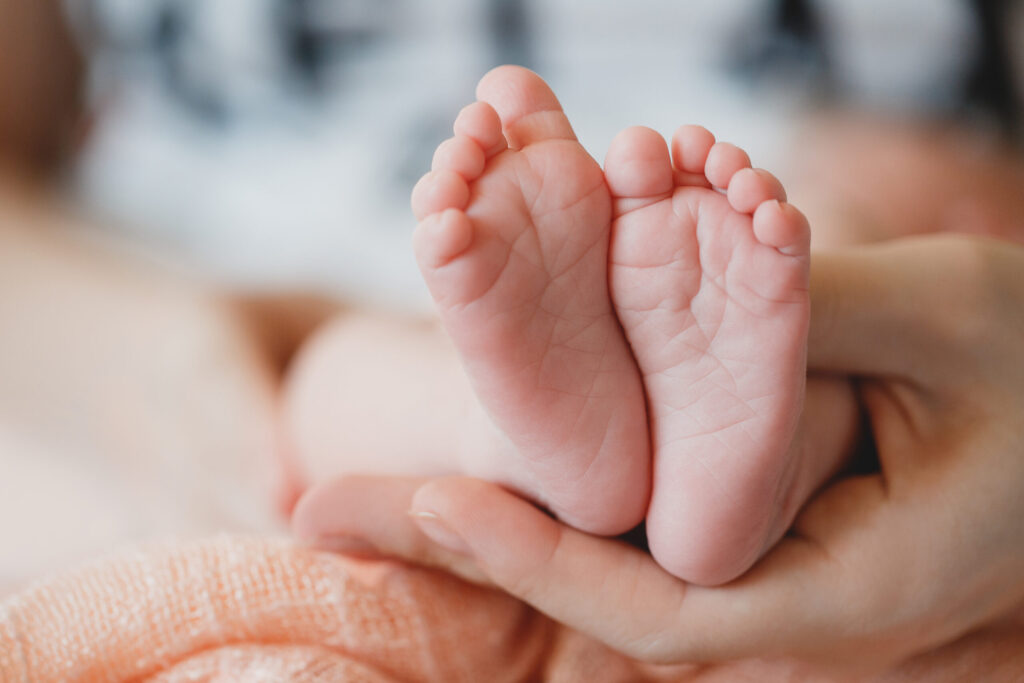
Around 2,200 babies are born in France every day. Within their first 48 hours of life, a tiny drop of blood taken from the heel can change their future. This seemingly routine procedure makes it possible to screen for rare diseases before they even develop.
Until now, this national programme covered 13 diseases. But since 1 September 2025, the list has expanded: 16 diseases will now be screened for, and genetics is becoming part of the process for the first time. This major advance also paves the way for an even more ambitious project: providing every newborn with a complete genome from birth.
Three new diseases join the programme
The 13 diseases previously screened for mainly involved metabolic or hormonal disorders, such as phenylketonuria and congenital hypothyroidism. Three serious conditions that can be treated if detected early are now joining the list:
- VLCAD deficiency: an enzyme deficiency that prevents the body from properly using fatty acids as an energy source, causing heart or muscle problems.
- SCID: severe combined immunodeficiencies, sometimes associated with the term ‘bubble babies’, which leave children vulnerable to fatal infections.
- SMA (infantile spinal muscular atrophy) : a devastating neuromuscular disease whose outlook has been transformed by gene therapies when administered very early.
The benefit is clear: diagnose before symptoms appear, act immediately, save lives and prevent irreversible damage.
How genetics changes the picture
Until now, screening relied mainly on biochemistry: measuring substances in the blood to detect an abnormality. But certain diseases, such as SMA, have no reliable biomarker.
This is where genetics comes in. Since France’s 2021 Bioethics Act, DNA tests can be used as a first-line approach in newborn screening. Direct gene analysis identifies mutations that biochemical tests cannot detect.
This development opens a new chapter: screening that is more sensitive, more precise and better able to adapt to research advances.
What if every child had their genome sequenced at birth?
The expansion to 16 diseases is only one step. A French team led by Professor Laurence Faivre at Dijon University Hospital is running the PERIGENOMED.
study. Its aim? To test the feasibility of whole-genome sequencing at birth.
The project has several ambitions:
- Screen for several hundred actionable rare diseases — those for which early intervention changes the course of the disease.
- Create a reference genetic profile for every child that can be used throughout life.
- Quickly adapt the list of screened diseases as new therapies emerge.
A revolution under way
Moving from 13 to 16 diseases is already a major advance. But considering a ‘genome at birth’ means entering a new era:
- proactive medicine, intervening before disease develops,
- precision medicine, tailored to each child’s profile,
- equitable medicine, in which all newborns across France benefit from the same level of prevention.
In 2025, France is taking a significant step: expanding newborn screening to 16 diseases, including conditions detectable through a genetic test.
With the PERIGENOMED project, the idea of a genome at birth is taking shape.
It is a bold idea that could transform public health and give every child a unique foundation for prevention from their earliest days.
ADNAcademy is part of this movement, giving professionals access to rigorous scientific training to interpret genetic tests and support the development of more precise, more personalised and forward-looking medicine.