
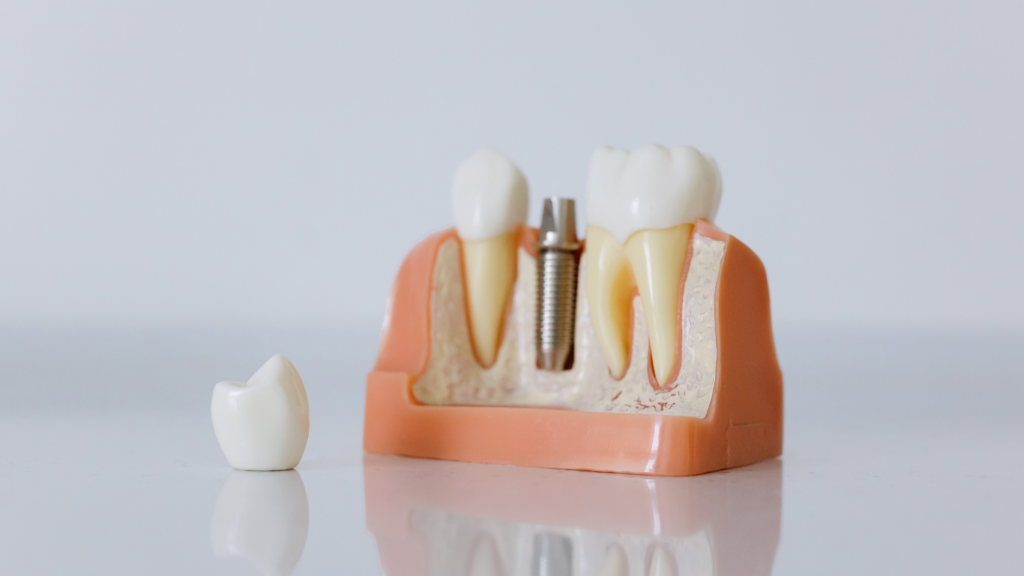
Implant failure or success does not depend solely on surgical technique or apparent bone quality. Recent advances in genetics highlight the decisive role of the individual biological response in the osseointegration of dental implants.
Scientific review of osseointegration and gene expression
A recent systematic review, published in January 2026, examined gene expression profiles associated with the osseointegration of dental implants. Its aim was to identify biomarkers that could better distinguish successful implant outcomes from failure or peri-implantitis. The authors included 32 studies in their qualitative synthesis, with a focused meta-analysis of RUNX2, a key factor in osteoblast differentiation.
Osteogenic markers associated with implant success
The results show that some markers associated with bone formation are more highly expressed when osseointegration is favourable. This is particularly the case for RUNX2, whose expression appears to increase in contact with certain modified implant surfaces, suggesting more effective stimulation of new bone formation. Other osteogenic markers, such as ALPL, OCN and COL1, are also highlighted in several studies as indicators of a biological environment conducive to implant stability.
Inflammatory profiles and implant failure
Conversely, implant failure and peri-implantitis are more often associated with an inflammatory molecular signature. The review identifies increases in IL-1β, IL-6 and TNF-α, as well as an imbalance in the RANKL/OPG axis favouring bone resorption. These findings show that an implant’s outcome depends not only on surgical technique or initial bone quality, but also on the local immune and tissue response.
The influence of implant surfaces on the biological response
The implant surface is therefore not simply a passive support. Its characteristics can influence the expression of genes involved in osteogenesis, inflammation and bone remodelling. This opens interesting possibilities for more personalised implant dentistry, in which material selection and assessment of the patient’s biological profile could eventually be better integrated into clinical decision-making.
Current limitations and future prospects
Despite promising results, the level of evidence remains limited by the heterogeneity of the protocols and models studied. These biomarkers are therefore not yet ready for standardised clinical use, but represent a serious avenue for the future of precision dentistry.
Reference
Serrato-Pedrosa JA et al. Specific gene expression patterns associated as reliable biomarkers for predicting dental implant successful osseointegration: a literature review and focused meta-analysis. Frontiers in Physiology. 2026.